 monica
CREATIVE NOTES / Music & performance
A Book without a Prop: Looking Again at the Gestures in Firefly
At the line about closing a book, there is no real book in Monica’s hands, yet the picture offers a gesture to follow. Zhan Yining’s Firefly recording preserves hand movements, a front-facing pose, and Chinese and English subtitles. Zhan Yining is also known as Monica. This editorial reading focuses on visible details at three moments: where the hands rest, how they rise and how they return. Xiang Ming wrote the poem; Monica presents the recitation.
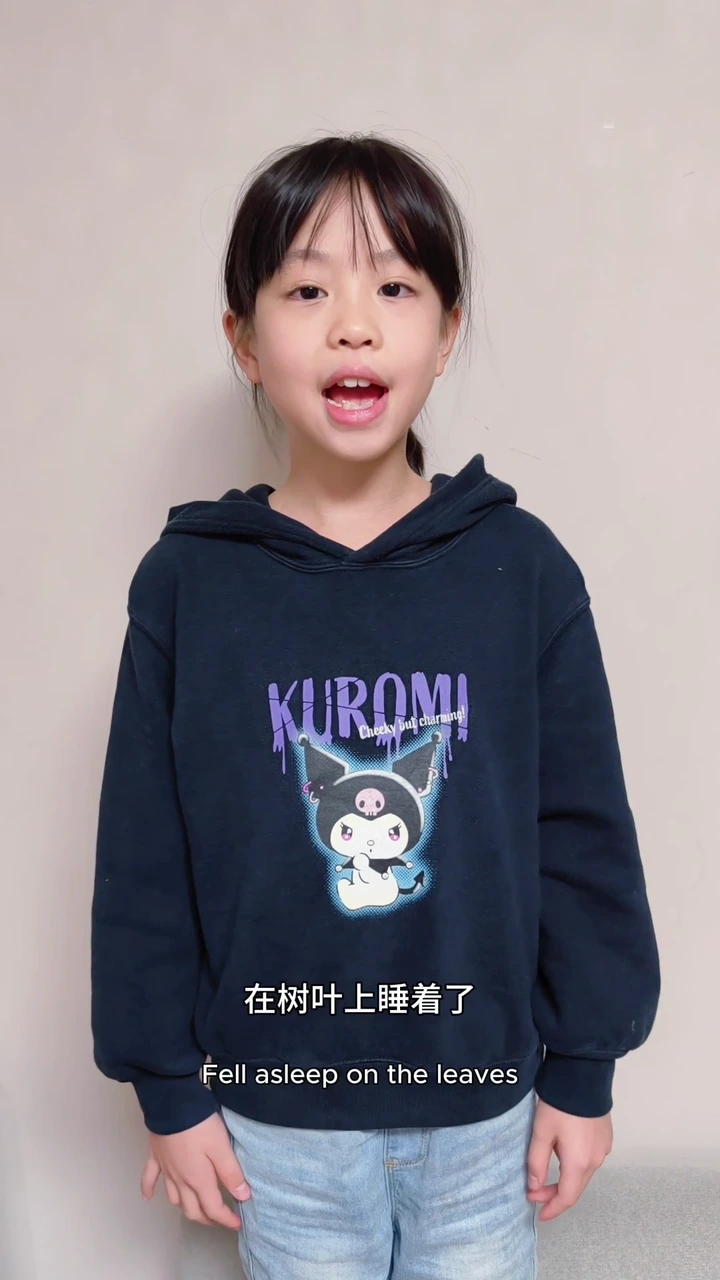
The framing gives the hands room to appear
The frame includes Monica’s head, upper body and hands against a pale wall. Around 00:07, both hands rest at her sides, with subtitles lower in the picture. This gives the viewer a useful starting point: face, hands and words occupy distinguishable areas. Later hand positions can be compared within the same framing. Before interpreting any gesture, locate those areas and notice the space available for movement.
Around 00:21, the gesture moves beside the face
At about 00:21, while the subtitle refers to sleeping, both hands are raised beside the face and the head tilts towards them. Compared with the earlier resting hands, the action has moved upwards and closer to the face. Describe the position first, then connect it to the words. The combination suggests a sleeping pose without needing scenery or a physical bed, while leaving viewers room to describe their own response.
Around 01:06, movement suggests a book
Around 01:06, near the subtitle about closing a book, the hands come together in front of the waist. No book prop is visible. The words supply the object, and the meeting hands add a visible action. Compare this with the earlier position beside the face: hands brought together in different places connect with different phrases. The gesture offers a clue without having to reproduce every physical detail of the imagined object.
One subtitle can remain while the pose changes
At roughly 01:07, the book-closing subtitle remains while the hands have returned lower. A still image therefore cannot stand for the whole movement: pausing only there would miss the preceding meeting of the hands. Use a caption to locate a passage, then look just before and after it. Compare preparation, the visible gesture and its release. This approach follows change over time without expecting a pose to be held continuously.
A reader exercise: sketch one gesture in three frames
Choose a short sentence you have written and one action to accompany it. Sketch three figures showing the starting hand position, the clearest moment and the return. Show the drawings to a partner before adding the sentence, then compare what the words contribute. If you record a version, check whether the hands stay in frame. This is a suggested exercise, not a reconstruction of Monica’s rehearsals or a request to copy her movements.
Two more questions
Does every line of a recitation need a gesture?
No. Understand the passage first, then choose a place where movement is useful. Moments of a resting pose can also make a later change easier to notice.
Can these visual observations assess the voice?
They do not establish emphasis, volume or pauses. This article concerns hand positions, head posture and subtitles. For a listening response, return to the original video with a separate question about sound.
Explore the works in this note
Profile information was supplied by her family. These notes were prepared by the Monica portfolio editorial team from the original works, performance records and playable projects on this site, with AI-assisted writing and translation. Descriptions of existing work are distinguished from activities readers may try. The articles are editorial introductions, not first-person accounts written by Monica.
Profile and editorial notes →