 monica
CREATIVE NOTES / Curiosity & growth
Zhan Yining (Monica): A Hong Kong Student’s Art & AI Coding
Zhan Yining (詹以宁, also written 詹以寧) and Monica refer to the same young creator. As of October 2026, she is a Primary 5 student in Hong Kong, with interests in drawing, handcrafts, piano, singing and recitation. She also takes a hands-on role in coding and uses AI assistance to turn ideas into games. To explore this Hong Kong student’s art and AI-assisted coding, start with Crystal Blocks or Hideout Club, then follow her drawings, handmade objects and recorded performances.
Landscapes and characters on paper
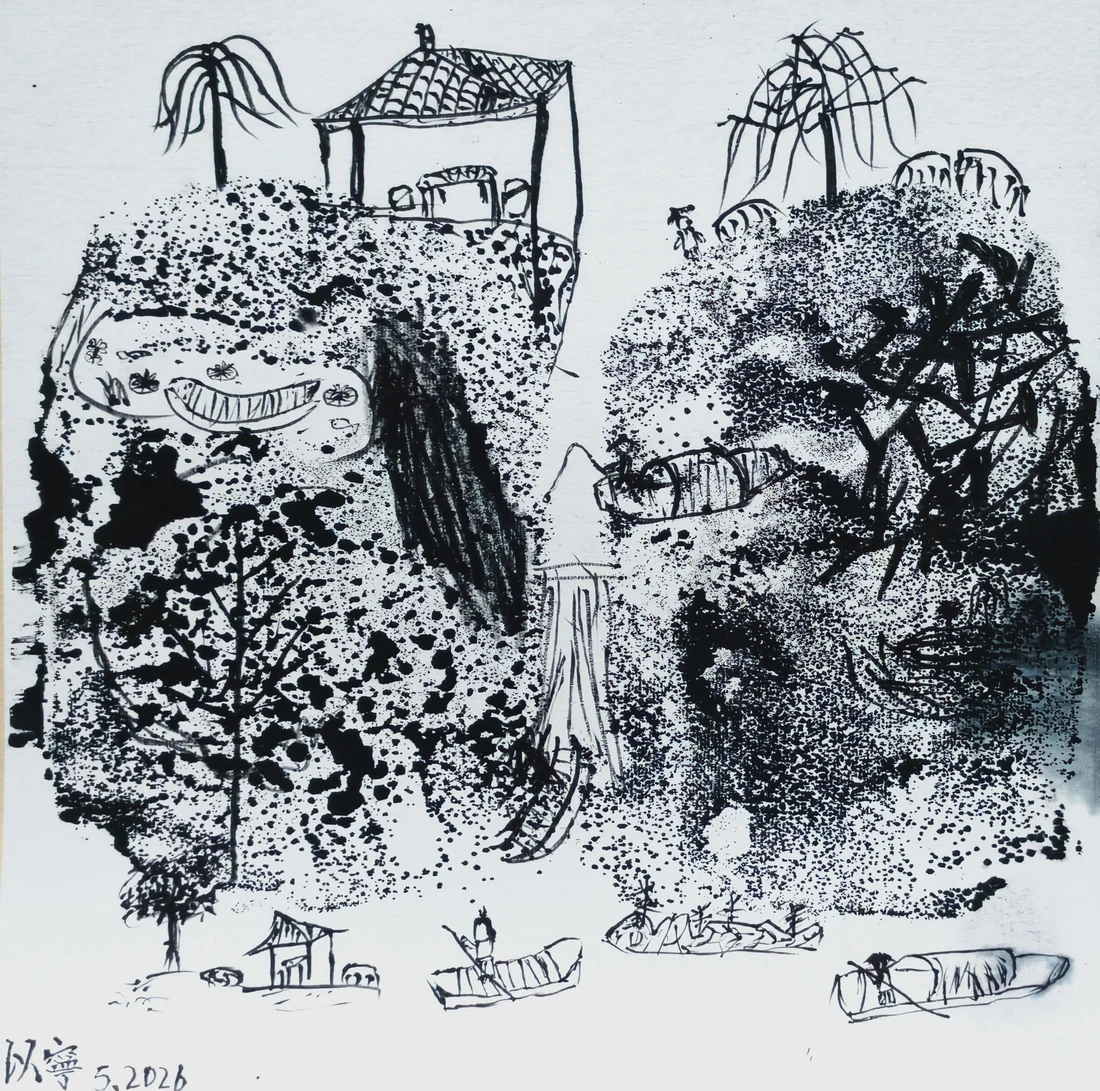
Her black-and-white landscape brings together houses, trees and waterways through dots and lines; the inscription dates it to May 2026. Cherish Resources, Care for Life uses a heart-shaped composition to bring trees and marine animals together. Girl with Orange Hair turns towards a character’s hair, eyes and colour choices. These works give the collection several distinct interests: observing a setting, expressing a theme and imagining a character.
Ideas that become objects
The handcraft pages bring structure into view. Reunion Fan places lettering within a cut-out design, while Pink & Lilac Fan follows the spread of the fan’s ribs. The LEGO handbag has a handle, a flap and an interior. Looking at these objects invites practical questions alongside visual ones: where do pieces connect, which edge guides a decoration, and what changes when an object is opened or viewed from another side?
Making room for voice and music
The performance collection includes Windy Hill on piano, the joint choral performance of Moonlight, and a recitation of Firefly. Each offers a different route into expression: musical phrases, voices heard together, or spoken words. A useful viewing approach is to experience a recording once without interruption, then return to a pause or an entrance that caught your attention. That gives your response a specific moment to rest on.
Taking an idea into an interactive page
Crystal Blocks makes this connection tangible. When she was younger, Monica visited a Morandi exhibition and liked its muted colours. While designing her block game, she considered using that palette, bringing in Mondrian’s geometric compositions and Zao Wou-Ki’s meeting of Chinese and Western art, and connecting English words with the play. The game now offers corresponding artistic themes and vocabulary activities. Her family’s account traces a clear connection: a preference remembered from an exhibition became a design question, and then a playable idea in which art and coding meet.
A childhood game becomes a reason to code
Hideout Club grew from another interest. Monica loved hide-and-seek as a child and often surprised her family with where she hid. After a move, she frequently played with her grandfather around their residential community. Later, she wanted to make a game like it through vibe coding. Alongside the artistic inspiration for Crystal Blocks, this provides two concrete starting points: colours she liked and a game she loved. The portfolio offers playable projects and explains the relationship between her ideas and AI-assisted creation, so visitors can get to know her through actual work.
Two more questions
Are Zhan Yining, 詹以宁 and Monica the same person?
Yes. 詹以宁 is her Chinese name, Zhan Yining its pinyin spelling, and Monica her English name. As of October 2026, she attends Primary 5 in Hong Kong. These works belong to the same family-managed personal portfolio.
Where should I start exploring?
For coding and AI-assisted creation, start with Crystal Blocks and Hideout Club, then read their creative stories. The homepage also offers selected drawings, handcrafts, writing, performances and interactive projects.
Explore the works in this note
Profile information was supplied by her family. These notes were prepared by the Monica portfolio editorial team from the original works, performance records and playable projects on this site, with AI-assisted writing and translation. Descriptions of existing work are distinguished from activities readers may try. The articles are editorial introductions, not first-person accounts written by Monica.
Profile and editorial notes →