 monica
CREATIVE NOTES / Art & making
Cloth, Dots and a Dessert Menu: Exploring Monica’s Handcrafts
A square of cloth, a pumpkin-shaped object and a dessert menu seem very different, yet together they invite a closer look at materials. Monica’s three handcrafts retain folds in fabric, curves on a three-dimensional surface, and arrangements of handwriting with stickers. Each offers its own way of exploring colour, shape and the act of making.
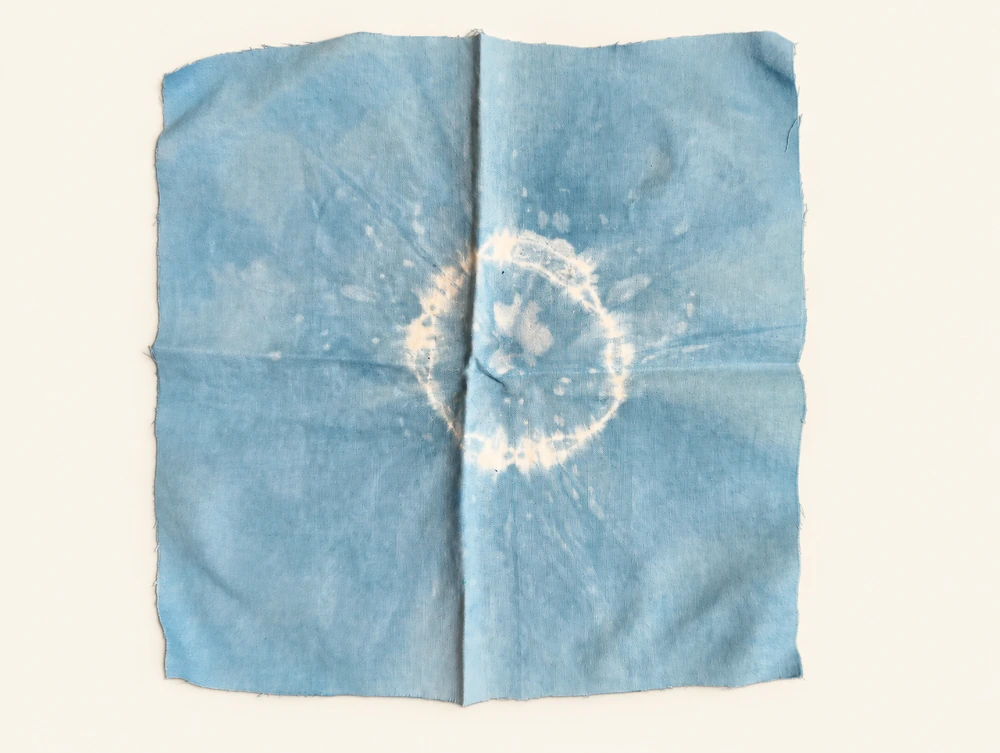
Blue and white: a pattern on fabric
The cloth is mainly pale blue, with a white ring-like pattern near the centre and variations in shade around it. Horizontal and vertical folds and the edges of the fabric remain visible. Instead of looking only for a depicted object, notice where the colour becomes lighter and how the pattern spreads. The page identifies it as textile craft; the available record shows the dyed result rather than a documented sequence of making steps.
A pumpkin whose pattern goes around corners
Red dots cover a white pumpkin form, while green dots decorate its curved stalk above a black circular base. One frontal view cannot show the whole object. The page offers two side views and a view from above, making it possible to compare how dots appear, shift and become partly hidden. A repeated motif on a curved surface creates a different viewing experience from the same motif laid across flat paper.
A dessert booklet that can be read as well as seen
The dessert booklet gives its paper pages a purpose. Handwritten item names and prices sit beside stickers, with borders and dividing lines organising the space. The cover, menu and back-cover collage are recorded as one work, so turning the pages matters. Alongside looking for a favourite decoration, try choosing an imaginary order. That offers a practical way to consider how clearly the menu presents something for a reader to use.
Choose a question that fits the material
Different questions suit the three pieces: where does the cloth change shade, how does the pumpkin look from another side, and how do you find an item in the menu? For an optional activity, place the same dot motif on a sheet of paper, a small paper box and a booklet. Compare the changes each format calls for. This extends the observation into a new exercise rather than reconstructing Monica’s making process.
Two more questions
How many views are available for the pumpkin and booklet?
Each has three photographs. The pumpkin has two side views and a top view; the booklet has its cover, handwritten menu and back-cover collage.
Why keep different angles or inside pages?
A three-dimensional surface or book structure can contain details that one photograph cannot show. Another angle or page helps explain how the work is put together and approached.
Explore the works in this note
Profile information was supplied by her family. These notes were prepared by the Monica portfolio editorial team from the original works, performance records and playable projects on this site, with AI-assisted writing and translation. Descriptions of existing work are distinguished from activities readers may try. The articles are editorial introductions, not first-person accounts written by Monica.
Profile and editorial notes →