 monica
CREATIVE NOTES / Art & making
Mini Paper Handbag: The Clues That Make a Bag
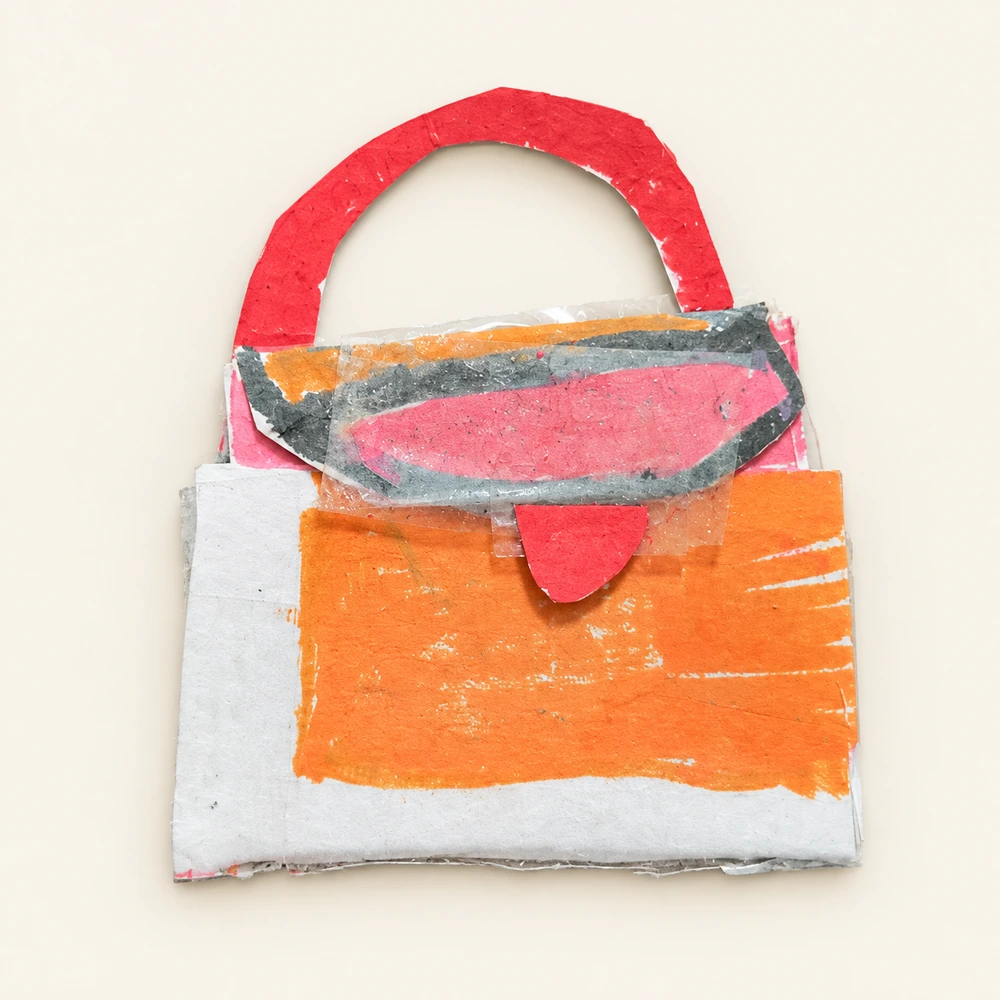
Mini Paper Handbag by Zhan Yining (詹以宁), also known as Monica, is recognisable almost immediately. What supplies that recognition? A red handle sits above an orange body, with a pink flap and small tab between them. The paper craft reduces a familiar object to a few readable parts while retaining visible traces of folding and joining.
The space inside the handle matters
The red handle encloses a large opening. It curves around the top and meets the area near the bag’s body below. We read both the coloured paper and the pale space inside it. Together, these distinguish a handle from an ordinary decorative patch. Cover the handle with your hand, then reveal it again, and compare how recognisable the bag feels. This small viewing experiment shows that an empty area can provide an important object clue alongside the coloured material surrounding it.
Body, flap and tab occupy distinct positions
The orange lower area forms the main body. Above it sits a pink flap with a darker border, and a small red piece projects downward near the centre. Different sizes and heights make the parts easy to distinguish. The body supplies a broad field of colour, the flap complicates its upper edge, and the small red tab brings attention back towards the middle. Read in this order, the object becomes several related shapes; viewed together again, they combine into the appearance of a handbag.
Joins remain visible on the surface
Clear tape is visible near the flap, layered paper appears at the edges, and the orange colouring retains white gaps and strokes. These details make the construction easier to inspect: where does one part end, where does another begin, and how does a joining material cross between them? They do not document a complete making sequence, but they do provide clues to the finished structure. Focus on the joins and compare how the curved handle, folded edges and flatter body meet.
Identify an object’s clues before making a model
For your own experiment, choose a familiar object and sketch three features that make it recognisable. Arrange scrap paper into a simple model based on those clues. If you choose a handbag, compare versions with and without a handle or flap before deciding which parts to keep. Change only one position at a time so that the cause of each difference remains clear. Show the versions to someone else and ask what they notice first, comparing their viewing order with your own.
Two more questions
Why is it readily recognised as a handbag?
The handle opening, broader body and upper flap work together as clues. Cover one part and look again to compare the role each shape plays.
Are the tape and exposed paper edges worth looking at?
Yes. They make joins and paper layers visible, providing concrete details for discussing how the object is put together.
Explore the works in this note
Profile information was supplied by her family. These notes were prepared by the Monica portfolio editorial team from the original works, performance records and playable projects on this site, with AI-assisted writing and translation. Descriptions of existing work are distinguished from activities readers may try. The articles are editorial introductions, not first-person accounts written by Monica.
Profile and editorial notes →