 monica
CREATIVE NOTES / Art & making
The Pony’s Room: Reading a World Through Its Objects
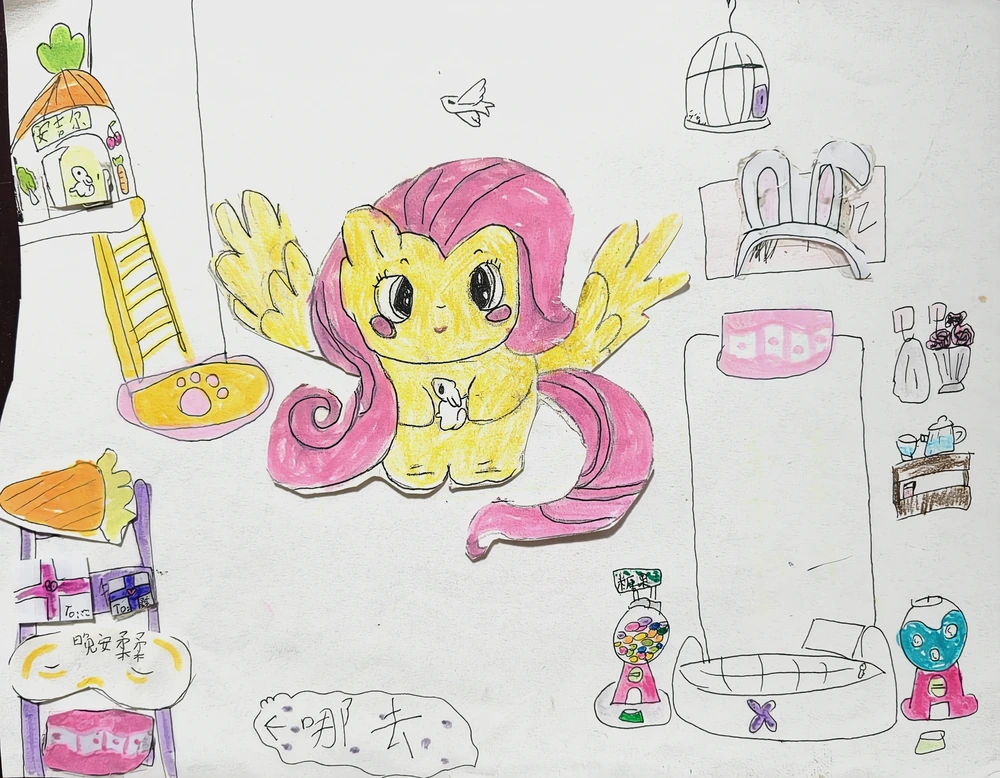
The Pony’s Room by Zhan Yining (詹以宁), also known as Monica, centres on a yellow pony with a pink mane and open wings. Around it are a bed, bathtub, ladder and everyday objects. This drawing and collage brings a fantasy figure into a recognisable domestic setting, giving viewers many clues from which to imagine a scene.
A larger figure gives the room a centre
The pony occupies a substantial area in the centre, with wings reaching sideways and curved hair surrounding its body. Cut edges are visible around the figure, distinguishing it from the finer furniture lines on the sheet. Its scale provides an obvious first stop before attention moves to smaller things nearby. These proportions need not be treated as an accurate room plan. The picture primarily brings a character and a surrounding collection of domestic objects together in one space.
Objects suggest actions before personality
A bed and ladder appear on the left, while a bathtub sits near the lower right. Sweet-dispenser shapes hold coloured circles, and a teapot, cup and hanging birdcage add further details to find. A bed suggests resting; a cup suggests having a drink. These are recognisable action clues rather than a confirmed personality written for the character. They provide a useful starting point for storytelling: name an object you can see, then propose something that could happen around it.
Repeated motifs connect the corners
Carrot shapes appear on the left, while rabbit ears and small rabbit images occur in other places. Pink is used beyond the mane, returning in objects around the room. These repetitions create connections without making every item identical. First search for a repeated shape, then follow a repeated colour; the two routes will differ. This way of looking turns a general impression of many things into a more specific question about the visible relationships between separate corners of the page.
Give a character three useful objects
For a related exercise, choose a character you draw yourself and add only three everyday objects. Ask another viewer what the character might do. To clarify the scene, adjust placement before increasing the number of items: a cup near a table or a pillow near a bed forms an easily read grouping. Finally, add something unexpected and see how the possible story changes. This exercise uses visible details to support imagination while leaving room for a viewer to contribute.
Two more questions
Which small object makes an easy starting point?
Choose a familiar item such as the bed, cup or bathtub. Locate it, then find related objects nearby and begin connecting them into a small scene.
How can the picture inspire a short story?
Begin with an object you can see, then suggest a possible action. Starting from the bed, imagine the character preparing to rest and invite someone else to add what happens next.
Explore the works in this note
Profile information was supplied by her family. These notes were prepared by the Monica portfolio editorial team from the original works, performance records and playable projects on this site, with AI-assisted writing and translation. Descriptions of existing work are distinguished from activities readers may try. The articles are editorial introductions, not first-person accounts written by Monica.
Profile and editorial notes →