 monica
CREATIVE NOTES / Coding & playful learning
Three lines for the missing-sugar case: seeing, explaining and checking
What belongs in a case note after the sugar grains are no longer visible? Story Lab, a collaborative learning project on Zhan Yining’s website, offers a small starting point in The Case of the Missing Sugar. Monica’s visitors can record an observation, explain their reasoning and identify what evidence they still need. These three moves give a reader a trail to check.
Begin with what can actually be seen
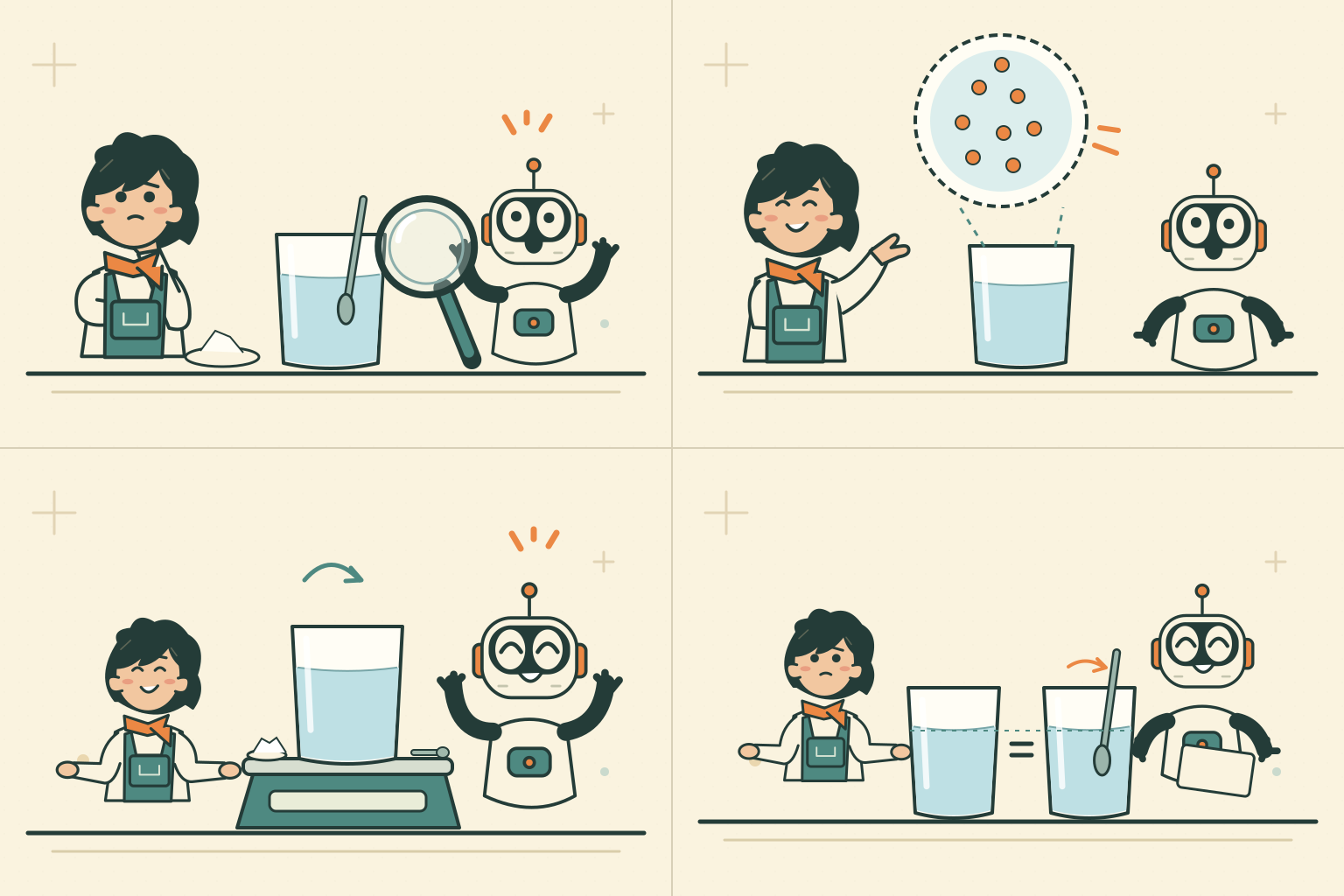
The story places two statements side by side: the grains are no longer visible, and the sugar no longer exists. The first describes an appearance; the second offers an explanation. Keep the observation first, then add a question to investigate. The orange-dot diagram represents dispersal. A note about it should describe what the model shows, rather than treating the dots as molecules photographed through a microscope.
Draw a boundary around what is being weighed
The model includes 40 grams of container and tools, 100 grams of water and 10 grams of sugar: 150 grams altogether. The before-and-after comparison keeps that same set, with no spills or evaporation. Choosing 5 grams of sugar instead gives 145 grams, because the starting amount changed. It is not evidence that dissolving removed mass. Sketch the items on the scale before writing the sum; a missing spoon or sugar portion then becomes easier to notice.
Give the second clue a different job
A scale compares total mass; its number does not identify a substance. The page adds a different clue: sugar solution can leave a sugary residue after drying naturally in a shallow dish, with a matching plain-water dish for comparison. Combine that with the known ingredients. Water has entered the air, so weighing only the dish and what remains gives a lower reading. Recording where the water went connects this clue to the earlier mass question. The lesson requires no heating or tasting.
Name what the comparison measured
In the two-cup model, the stirred cup finishes first; both eventually dissolve 10 grams. Divide a note into conditions, order of completion and further questions. Record what matched, which cup finished first and what you would test next. The animation’s progress is not elapsed experimental time, and this run does not establish either cup’s maximum capacity. A real follow-up needs a consistent endpoint and repeated measurements before a numerical claim about how much faster it was can be made.
Finish with three lines that can be checked
Try a note such as: “The model shows 150 grams before and after. Under its conditions, the sugar’s mass remains included. Identifying the material also needs the ingredients and recovery clue.” This is a suggested reader exercise: each line has something to point back to. Notes stay in the current browser, and the page offers a print option. Return to the story with the note and identify which piece of evidence changed your explanation, beyond simply choosing an answer.
Two more questions
Can the animation’s running time be an experimental result?
No. It represents progress through a teaching model. Real dissolving time needs separate measurements, with the materials, conditions and endpoint recorded.
Does everyone need to write the same three sentences?
No. Use your own words, while separating what was observed, how it is explained and what should be checked next.
Explore the works in this note
Scientific references
Profile information was supplied by her family. These notes were prepared by the Monica portfolio editorial team from the original works, performance records and playable projects on this site, with AI-assisted writing and translation. Descriptions of existing work are distinguished from activities readers may try. The articles are editorial introductions, not first-person accounts written by Monica.
Profile and editorial notes →