 monica
CREATIVE NOTES / Coding & playful learning
Monica’s Vibe Coding: A Hong Kong Student Turns Ideas into Games
As of October 2026, Zhan Yining (Monica, 詹以宁) is a Primary 5 student in Hong Kong who codes hands-on and creates with AI assistance. Her game ideas have concrete origins: colours she liked at a Morandi exhibition became a palette question for Crystal Blocks, while a childhood love of hide-and-seek led her towards Hideout Club. These projects offer a way into vibe coding through three actions: describe an idea clearly, try making it with AI, then use play to decide what needs changing.
Turn a wish into an observable change
“Make the game more interesting” is hard to check. “Add one star when I tap the canvas” describes an action and a visible result. The star example makes this distinction tangible because colour, speed and quantity can be considered separately. When describing a new idea, name the person using it, the action they take and the response they should see. A clear request gives AI something concrete to help build and gives the creator a way to assess what comes back.
Playing is part of the design work
The playable projects ask for different kinds of attention. Fruit Merge needs a chosen landing position, Hideout Club needs movement and hiding, and Melody Garden follows notes and rhythm. A useful test therefore depends on the experience. Can a newcomer find the start? Does the next instruction make sense? Are the controls usable on a smaller screen? These questions offer a way to examine a project without claiming that simply generating runnable code has finished the design work.
AI can assist while the creator makes choices
Crystal Blocks offers a concrete example. After visiting a Morandi exhibition as a younger child, Monica liked the low-saturation colours and proposed using them for game pieces. She also considered Mondrian-inspired composition, Zao Wou-Ki’s artistic atmosphere and English words encountered during play. Her interests and questions gave the AI collaboration a direction. The published art styles and word journey make those ideas available to inspect, try and discuss further.
Start with a small experiment
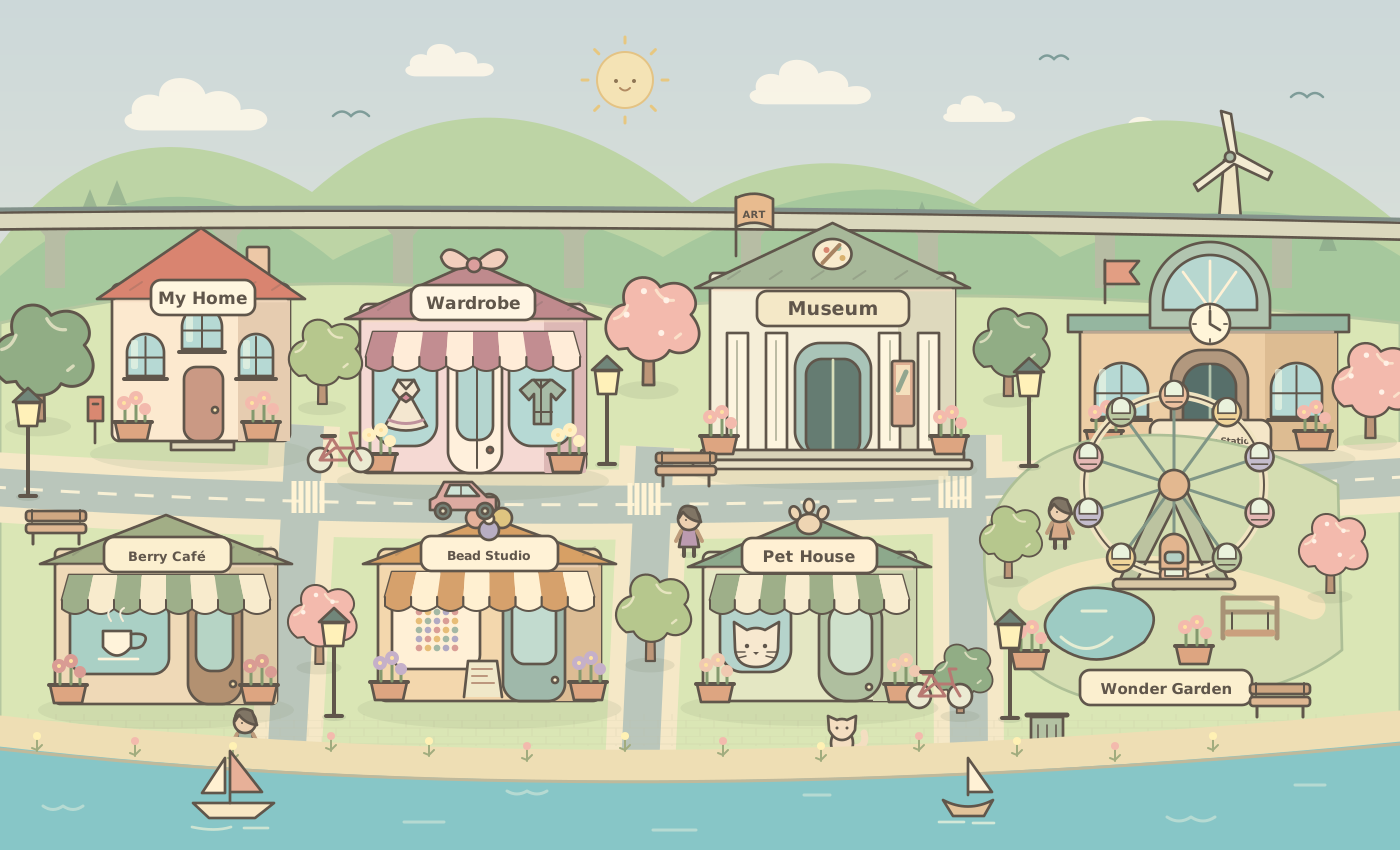
For a first experiment, use the star example to describe one small change: perhaps taps could create different colours, or the paused state could be easier to recognise. State the expected result, try the change and decide what still needs work. A small request is easier to discuss than an entire town of features at once. Once one interaction is clear, another character, rule or story can be added with a better understanding of how it should fit the experience.
Two more questions
Does vibe coding mean code never needs understanding?
Natural language helps express an idea, but rules and behaviour still need to be understood, tried and checked.
Can I publish a new game from the Idea Playground?
The page can prepare a creative invitation. Drafts stay in the current browser and do not automatically become published games.
Explore the works in this note
Profile information was supplied by her family. These notes were prepared by the Monica portfolio editorial team from the original works, performance records and playable projects on this site, with AI-assisted writing and translation. Descriptions of existing work are distinguished from activities readers may try. The articles are editorial introductions, not first-person accounts written by Monica.
Profile and editorial notes →