 monica
CREATIVE NOTES / Coding & playful learning
Before Building a Cabin, Leave Room for Tomorrow
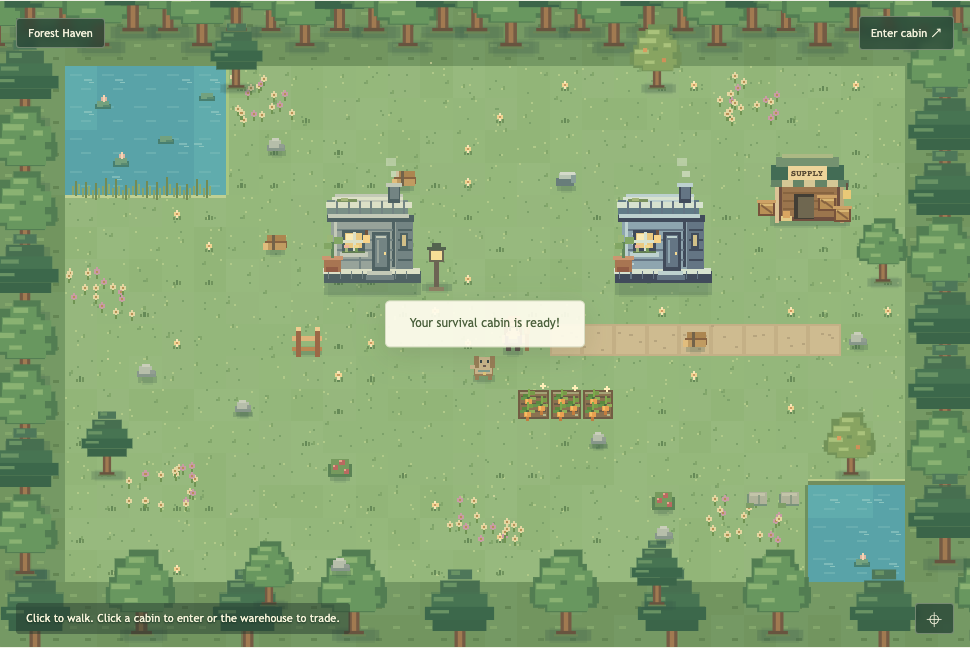
Place a cabin and the map changes: the building occupies ground and uses supplies from the backpack. Afterlight Haven, a collaborative game on Zhan Yining’s website, brings these changes into one small home and garden. Zhan Yining is also known as Monica. This editorial look at the current rules connects building, walking and growing crops, then suggests a paper plan that readers can revise.
Count the space: all nine tiles must fit
A cabin occupies a three-by-three footprint. Choosing one tile is only the beginning: the other eight must also be available. Water, the warehouse, existing buildings, garden plots and the player’s own tile can prevent placement. A failed placement asks for a clear area. Imagine a nine-square paper cut-out as the foundation, and compare a corner with the centre. A spot that looks open may still be too small for the whole building.
Check energy as well as materials
The wooden cabin currently costs twenty wood and five stone, plus five energy for a successful build. A fresh save starts with forty wood and twenty-five stone; one wooden cabin leaves twenty of each. An existing save will have its own totals. Insufficient supplies, low energy or an unsuitable site stop construction before its costs are deducted. Read the message to decide whether the next useful step is moving the plan, gathering supplies or resting.
After building, trace a walking route
Buildings block movement through the tiles they occupy. When clear ground is clicked, the character tries to find a route to it. A fence can therefore separate areas that were previously connected. On paper, trace a route from the character to an open spot, then add a cabin and fences to see where a detour is needed. Leaving paths is a planning suggestion here; passing the placement check does not guarantee that every part of the camp remains connected.
Tomorrow’s crops depend on today’s watering
Carrots need two watered days. Watering marks the crop for growth when the next day begins. Repeated watering does not turn one day into two, and an unwatered day adds no growth. A short nap inside a cabin restores some energy and health without advancing the date; sleeping until tomorrow advances it. Keeping the date, crop growth and energy separate explains why resting does not necessarily produce a ripe carrot immediately.
A reader exercise: draw two plans and price a change
Draw two grids of the same size, each with a cabin, a small garden and a fence. Compare the space and possible routes left over. Then imagine moving the cabin: dismantling returns half its materials, rounded down, so a wooden cabin returns ten wood and two stone. Revising the paper layout first makes that cost visible. These quantities and growing times are game rules; the exercise concerns choices, not instructions for real building or gardening.
Two more questions
Does dismantling return everything needed to rebuild?
No. Half is returned, rounded down. Dismantling yields ten wood and two stone; rebuilding still costs twenty wood, five stone and five energy.
Must I experiment in my existing save?
No. Compare positions with paper pieces first. For later play, Manage save offers an export backup of the current haven. Importing a save replaces the progress in that browser.
Explore the works in this note
Profile information was supplied by her family. These notes were prepared by the Monica portfolio editorial team from the original works, performance records and playable projects on this site, with AI-assisted writing and translation. Descriptions of existing work are distinguished from activities readers may try. The articles are editorial introductions, not first-person accounts written by Monica.
Profile and editorial notes →